BFF
- aka BFF
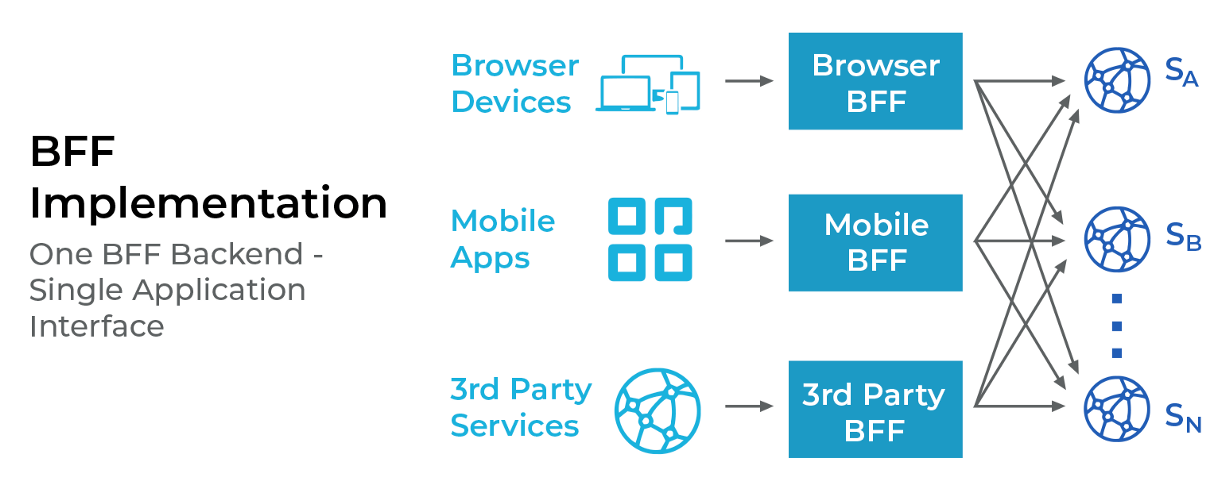
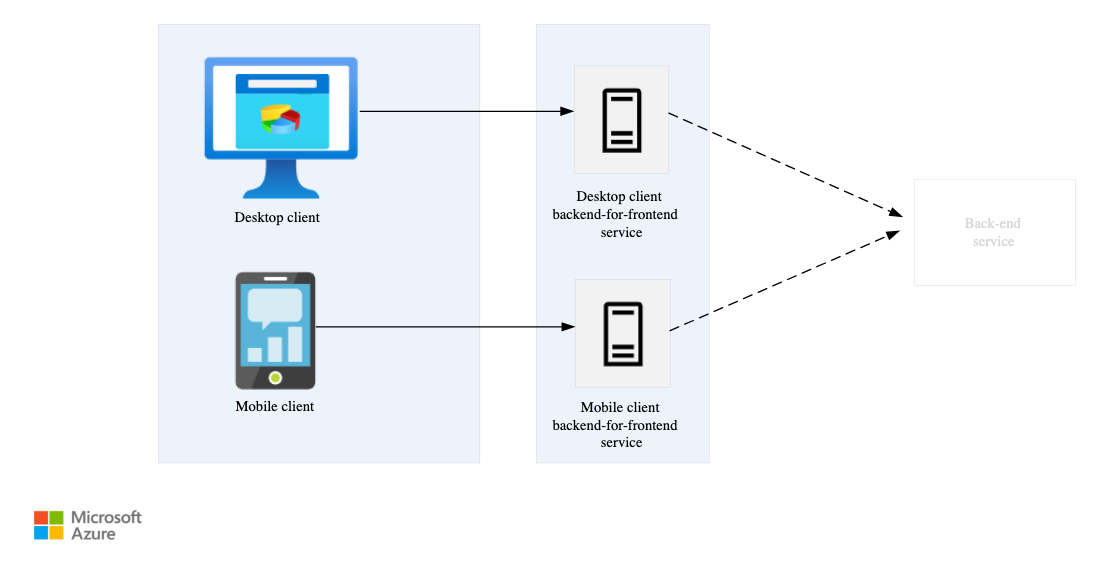
- Separate backend services for different types of clients, such as desktop and mobile.
- Single backend service doesn’t need to handle the conflicting requirements of various client types.
- Steps:
- Call the relevant microservices APIs and obtain the needed data
- Format the data based on the frontend representation
- Send the formatted data to the frontend
Advantages
- Separation of concerns
- Frontend requirements will be separated from the backend concerns. This is easier for maintenance.
- Easier to maintain APIs
- The client will know less about your APIs structure, which will make it more resilient to changes in those APIs.
- Better error handling in the frontend
- Server errors are meaningless to the frontend user most of the time.
- Instead of directly returning the error server sends, the BFF can map out errors that need to be shown to the user.
- This will improve the user experience.
- Multiple device types can call the backend in parallel
- While the browser is making a request to the browser BFF, the mobile devices can do the same. It will help obtain responses from the services faster.
- Better security
- Certain sensitive information can be hidden, and unnecessary data to the frontend can be omitted when sending back a response to the frontend.
- The abstraction will make it harder for attackers to target the application.
- Shared team ownership of components
- Frontend teams can owns both their client application and its underlying resource consumption layer